
Budgeting for a Full-Home Remodel: Where to Invest & Where to Save.
Updated: Sep 3
One of the first conversations we have with clients planning a full-home remodel is about budget.
Not because the goal is to spend as little as possible, but because a successful design requires deciding where the investment matters most
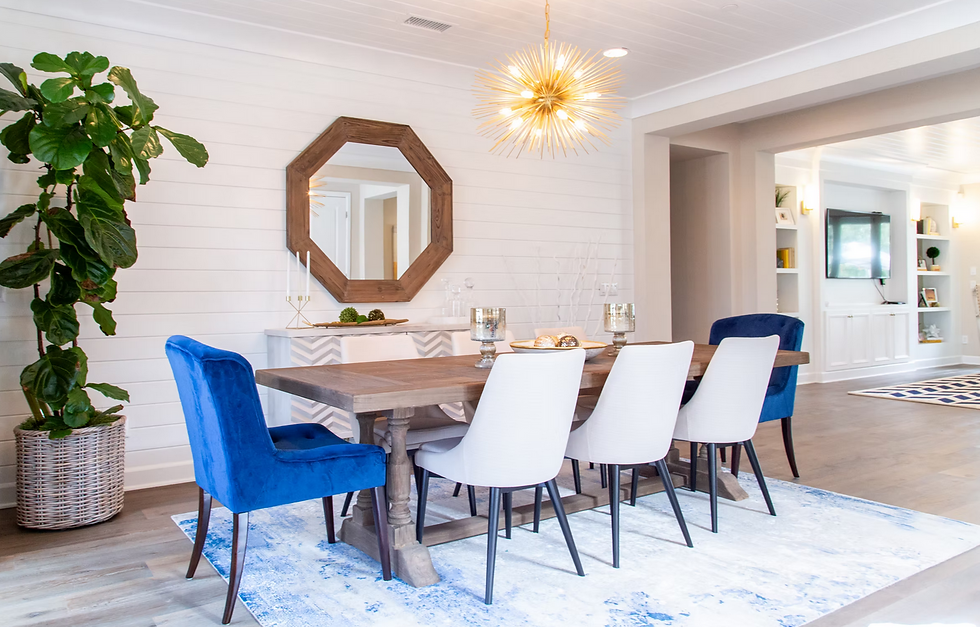
A whole-home renovation includes far more than the finishes you see at the end. Construction, cabinetry, appliances, plumbing, lighting, flooring, furnishings, window treatments, installation, and countless smaller details all compete for the same overall budget.
The key isn't spending equally everywhere. It's spending intentionally.
Start With the Entire Project
One of the easiest ways for a renovation budget to get away from you is to make decisions one room at a time.
You might fall in love with an expensive range, beautiful stone, or custom cabinetry early in the project without realizing how that decision affects what remains for lighting, furnishings, or another part of the house.
We prefer to look at the project as a whole.
Understanding the complete scope allows us to help clients establish priorities before selections begin and make better decisions as the design develops.
Decide Where You Want to Invest
There isn't one universal list of things everyone should splurge on.
The right answer depends on you.
Someone who cooks every night may happily dedicate more of the budget to appliances and kitchen functionality. A client who loves entertaining might prioritize the great room, bar, or outdoor living areas. Someone who considers their primary suite a sanctuary may care far more about the bathroom, bedding, and lighting.
We want to understand what will have the greatest impact on your experience of the home.
That's where the investment should go.
Saving Doesn't Have to Mean Compromising the Design
Saving strategically isn't the same thing as choosing the least expensive option.
Sometimes a beautiful material can be used selectively rather than everywhere. A statement tile might be perfect in one location while a quieter complementary material works elsewhere. Custom elements can be reserved for places where they make the greatest difference.
We can also mix investment pieces with more accessible selections when appropriate.
The goal is to preserve the overall design rather than treating every individual item as equally important.
Plan Before Construction Begins
Some of the most expensive remodeling mistakes happen because decisions are made too late.
Changing a layout after construction has begun, relocating electrical after walls are finished, discovering that a selected fixture doesn't work with the cabinetry, or realizing that furniture won't fit the completed room can create unnecessary costs.
That's one of the reasons we encourage clients to involve their design team early.
Our design services consider the architecture, interiors, furnishings, and details together so decisions can be coordinated before they become expensive changes in the field.
Don't Forget the Finished Home
Construction tends to consume everyone's attention during a remodel, but eventually the contractors leave.
Then you still need a home.
Furniture, rugs, lighting, window treatments, art, accessories, delivery, and installation should be considered as part of the overall project budget if you want the home to feel complete when the renovation is finished.
Planning for those pieces from the beginning also allows us to make sure the architecture and furnishings work together rather than treating decorating as an afterthought.
A Good Budget Reflects Your Priorities
We don't believe every full-home remodel needs the same finishes, the same investment level, or the same priorities.
A successful budget gives us a framework for making decisions.
Our job is to understand what's important to our clients, help them see where their money will make the greatest difference, and create a home where the individual decisions ultimately support one cohesive vision.
Because the goal isn't simply to spend more—or spend less.
It's to spend thoughtfully on the home you actually want to live in.


Comments